
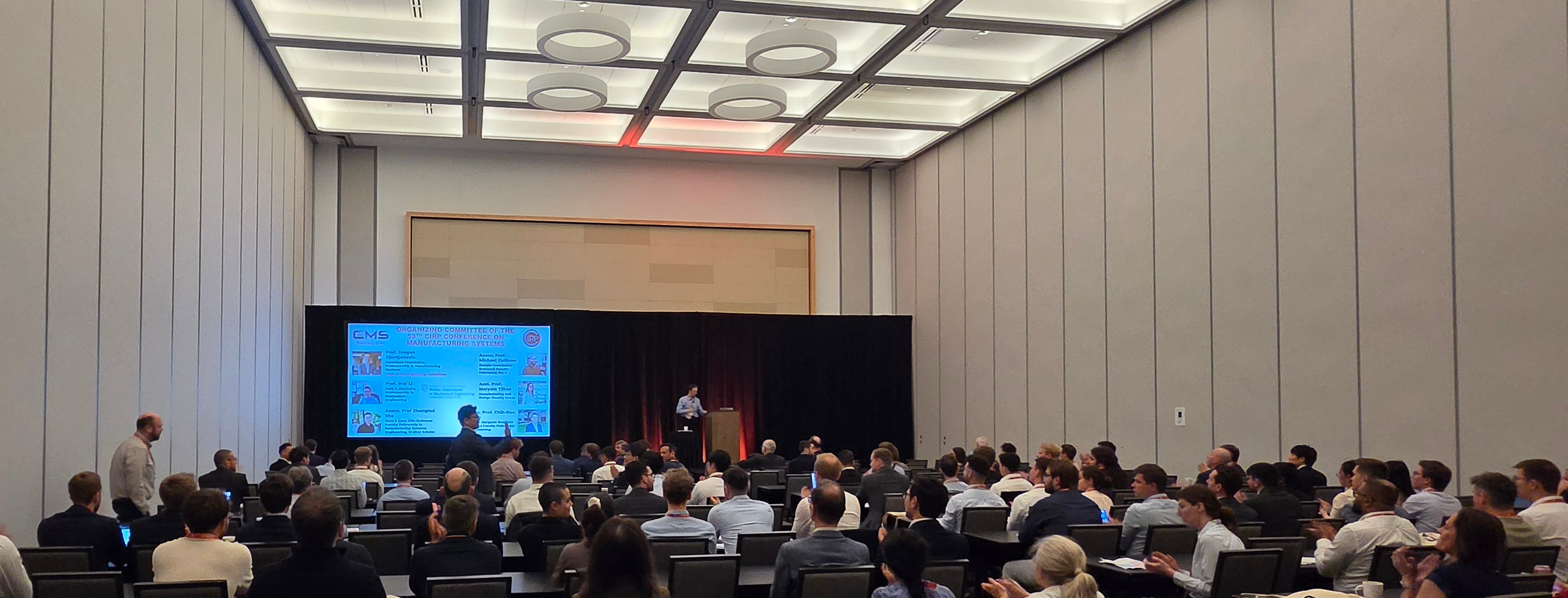
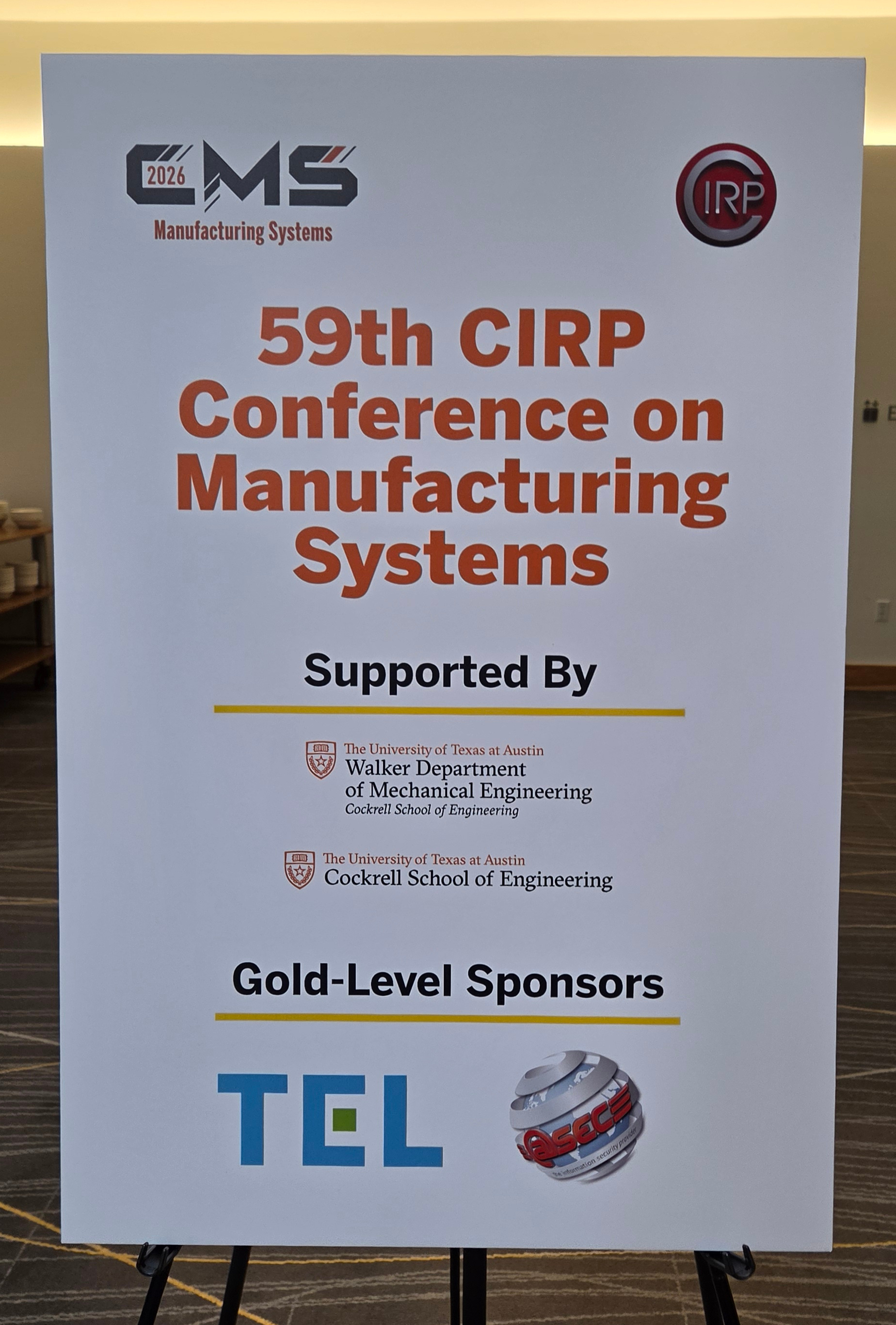
atsec information security was proud to serve as a Gold-level sponsor of the 59th CIRP Conference on Manufacturing Systems (CMS), held May 19-21, 2026, in Austin, Texas. For us, the decision to support the conference was not simply about visibility. It reflected several trends that are increasingly shaping both our industry and our long-term technical focus.
Austin has rapidly emerged as one of the most important centers for semiconductor design and advanced manufacturing in the United States. With continued investment in chip fabrication, semiconductor research, and high-technology manufacturing, the city is becoming a natural meeting point for experts working across hardware, software, and industrial systems.
At atsec, our work has traditionally focused on the security and validation of information systems, particularly in areas involving cryptography, standards compliance, and high-assurance technologies. The same principles used to secure cryptographic modules (more often than ever are chips nowadays) and trusted computing environments now have growing relevance in manufacturing chips itself: protecting intellectual property, securing production workflows, validating supply chain integrity, and ensuring trust in increasingly automated industrial systems.
That evolution makes manufacturing security especially important. As factories become more connected, data-driven, and AI-assisted, the integrity of the manufacturing process itself becomes part of the overall security problem. Conferences like CMS provide an opportunity to better understand how advanced manufacturing research is evolving and where security considerations must evolve alongside it.
Supporting the conference also reflects atsec’s long-standing commitment to academic research and technical education. We have been proud to contribute to The University of Texas at Austin through scholarship and student support initiatives, and we strongly believe that collaboration between academia and industry is essential for solving complex engineering and security challenges. CMS demonstrated exactly the kind of rigorous, technically grounded exchange that makes those collaborations valuable.
Why CIRP CMS Matters
The CIRP Conference on Manufacturing Systems (CMS) is one of the leading international forums for advanced manufacturing research. Organized under the umbrella of CIRP — the International Academy for Production Engineering — the conference brings together researchers, industrial practitioners, and technology leaders working on the future of manufacturing systems, automation, production intelligence, and industrial engineering. Over decades, CIRP conferences have developed a reputation for rigorous peer-reviewed research, strong industrial participation, and highly technical discussions that bridge academic theory with practical implementation.
The 59th edition of CIRP CMS, hosted by the Walker Department of Mechanical Engineering at The University of Texas, reflected both the global reach and the technical depth of the conference. The program featured keynote speakers from academia and industry, including representatives from TSMC, Hitachi Group, General Motors Research & Development, D-SIMLAB, and the Texas Institute for Electronics.
What stood out most was how clearly the conference reflected the direction manufacturing is heading. Artificial intelligence was no longer treated as an experimental concept, but as an operational capability being integrated directly into manufacturing systems. Entire tracks were dedicated to “Generative AI, LLMs, agentic systems, and other emerging computational concepts in manufacturing,” with presentations covering topics such as LLM-assisted workflow automation, retrieval-augmented generation for industrial knowledge management, AI-driven production optimization, and autonomous decision-making systems for factories.
Digital twins formed another major pillar of the conference. Multiple sessions explored digital-twin-enabled manufacturing intelligence, including plant-level simulation integration, predictive quality systems, industrial metaverse concepts, and real-time synchronization between physical manufacturing assets and virtual operational models. These discussions highlighted how manufacturing is evolving toward continuously monitored, data-driven production environments where simulation, analytics, and operational control increasingly converge.
Equally notable was the growing emphasis on resilience and cybersecurity in manufacturing systems. Dedicated sessions addressed resilient cyber-physical systems, secure cloud manufacturing architectures, operational recovery from stealthy cyberphysical attacks, and robust manufacturing control systems. For atsec, this area was especially important because it reflects the growing realization that manufacturing security can no longer be separated from broader cybersecurity and trust assurance requirements.
The conference also demonstrated how deeply semiconductor manufacturing and advanced electronics are influencing the future of industrial systems. Presentations involving TSMC, semiconductor manufacturing simulation, virtual metrology for semiconductor processes, and autonomous material handling in semiconductor fabs reinforced Austin’s emerging role as a major center for advanced semiconductor research and production.
Beyond the technical sessions themselves, the 59th CIRP CMS reflected the value of close collaboration between academia and industry. The conference combined highly theoretical work — including quantum optimization methods, ontology-driven digital twins, and AI-enabled industrial reasoning systems — with practical manufacturing challenges involving sustainability, robotics, maintenance, logistics, and secure industrial infrastructure. That combination of research rigor and practical relevance is precisely what makes CIRP CMS such a respected conference within the manufacturing systems community.
A Conference Designed for Collaboration
The venue itself also contributed significantly to the success of the conference. The AT&T Hotel and Conference Center proved exceptionally well suited for an international technical event of this scale. The conference spaces were spacious, comfortable, and professionally organized, with an overall layout that encouraged both formal presentations and the equally important informal technical discussions that happen between sessions.
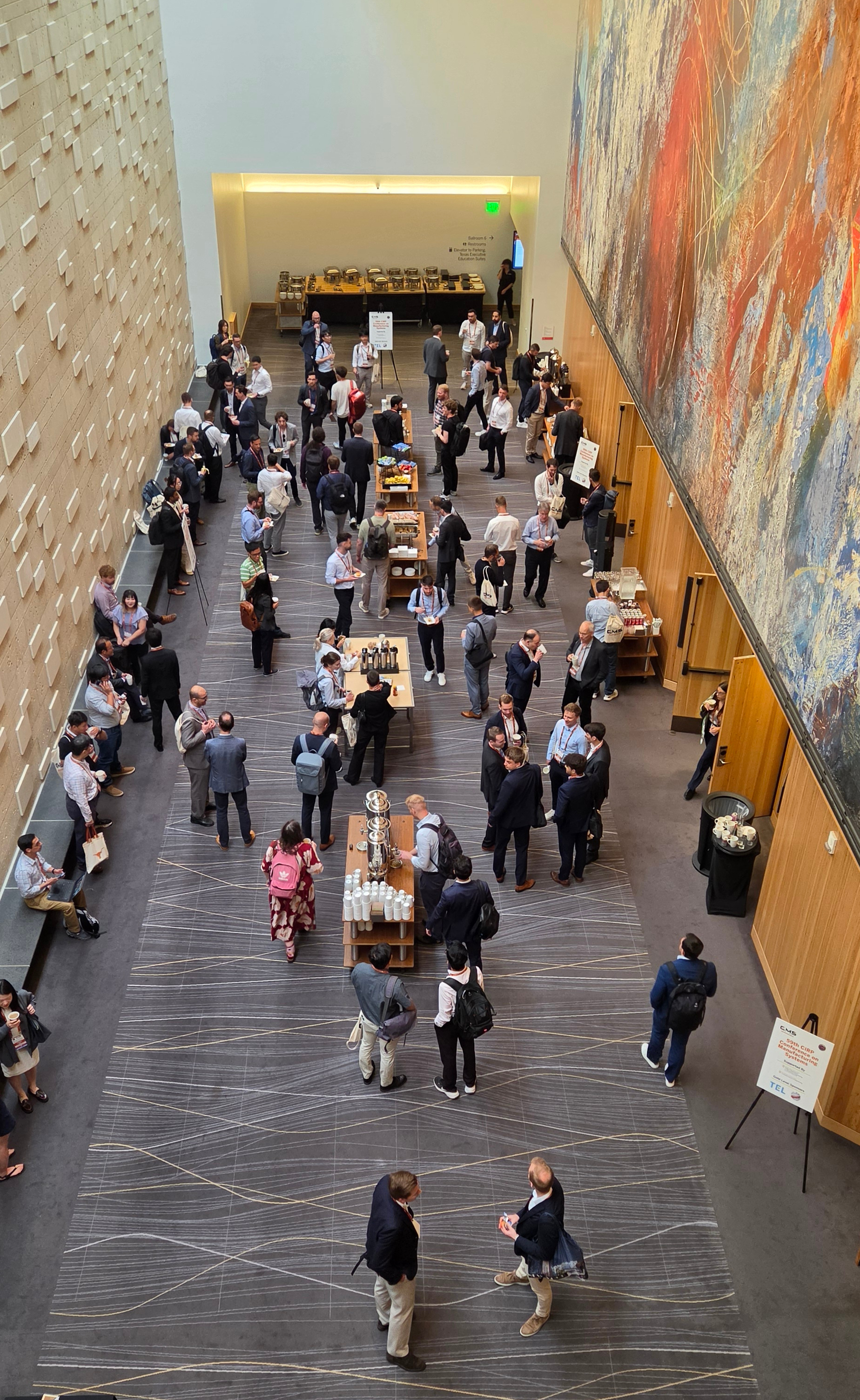
The open networking areas created a natural environment for conversations among researchers, industry participants, and students, while the quality of the food and hospitality throughout the event helped create a welcoming atmosphere for attendees traveling from around the world. These details may seem secondary to the technical program itself, but they play an important role in enabling the kind of sustained interaction and collaboration that makes conferences valuable.
The location was equally outstanding. Situated directly on The University of Texas at Austin campus, the venue placed attendees within walking distance of the Texas State Capitol, several museums, and downtown Austin. That combination of academic setting and access to the broader city gave the conference a uniquely Austin character – blending research, technology, culture, and industry in a way that felt highly appropriate for a conference focused on the future of manufacturing systems.
Looking Ahead: FIPS ’n’ Chips and the Convergence of Security and Manufacturing
Experiencing the 59th CIRP CMS also reinforced our excitement for the upcoming FIPS ’n’ Chips conference, which will take place in Austin on October 26-27, 2026. Many of the themes discussed throughout CIRP CMS – trusted systems, resilient infrastructure, AI-enabled industrial platforms, semiconductor manufacturing, and secure digital integration — closely parallel the challenges increasingly facing the security and cryptographic validation community.
As advanced manufacturing, semiconductor systems, and cybersecurity continue to converge, we believe there is growing value in creating forums that bring together experts across these traditionally separate disciplines. Our goal for FIPS ’n’ Chips is to foster the same kind of technically rigorous, highly collaborative exchange that made the 59th CIRP CMS so valuable.
After spending several days at the AT&T Hotel and Conference Center, it is also easy to see why the venue has become such a strong destination for technical conferences. Its combination of excellent facilities, strong campus atmosphere, and proximity to downtown Austin creates an environment particularly well suited for international engineering and research events. In fact, after experiencing the venue firsthand, it is not difficult to imagine it serving as an excellent future location for an ICMC event as well.
We would like to thank Professor Dragan Djurdjanovic, the organizing committee, and The University of Texas at Austin for delivering such a well-organized and intellectually engaging conference. The 59th CIRP CMS demonstrated not only where manufacturing systems research is today, but also where the broader industrial and technology landscape is heading in the years ahead.